Quick answer: On a peptide label, "research use only" is a wording choice by the seller, not an FDA category. In ten FDA warning letters dated 2025-02-26 to 2026-08-24, the agency says the wording does not change what a product is intended for when the seller's marketing shows human use. No FDA-approved drug contains BPC-157 or TB-500 as of 2026-10-09. Letters are described here by date and category only.
Search results for BPC-157 and TB-500 are full of pages that sell vials with a short disclaimer on the label. This page explains what that disclaimer is, what FDA has said about it, and what it means in practice for quality and risk. It covers the label wording only. For the status of the substances themselves, see the legal status page; for what we do about purchase questions, see the where-to-buy page.
What the label means
Laboratories do use chemical reagents, and a reagent supplier will often print that a product is for laboratory use and not for people. That is a genuine category. The wording matters in this setting because it is also what many online sellers print on peptide products that their own pages describe in terms of human goals.
Plainly, "research use only" is a statement by the seller. It is not an FDA approval, not a quality grade and not a legal exemption. We searched FDA's site on 2026-10-09 and found no consumer page that defines "research chemicals" for peptides. FDA's language on the subject sits in its warning letters and in its briefing documents. In the BPC-157 briefing FDA notes websites selling BPC-157 and TB-500 combination products "for research purposes only and not for human or veterinary use".
Related phrases mean the same thing for this purpose: "not for human consumption", "for laboratory use only", "analytical use" and "not for human or veterinary use". Each is a seller's statement about the product, and none is an FDA finding.
How FDA reads it: intended use
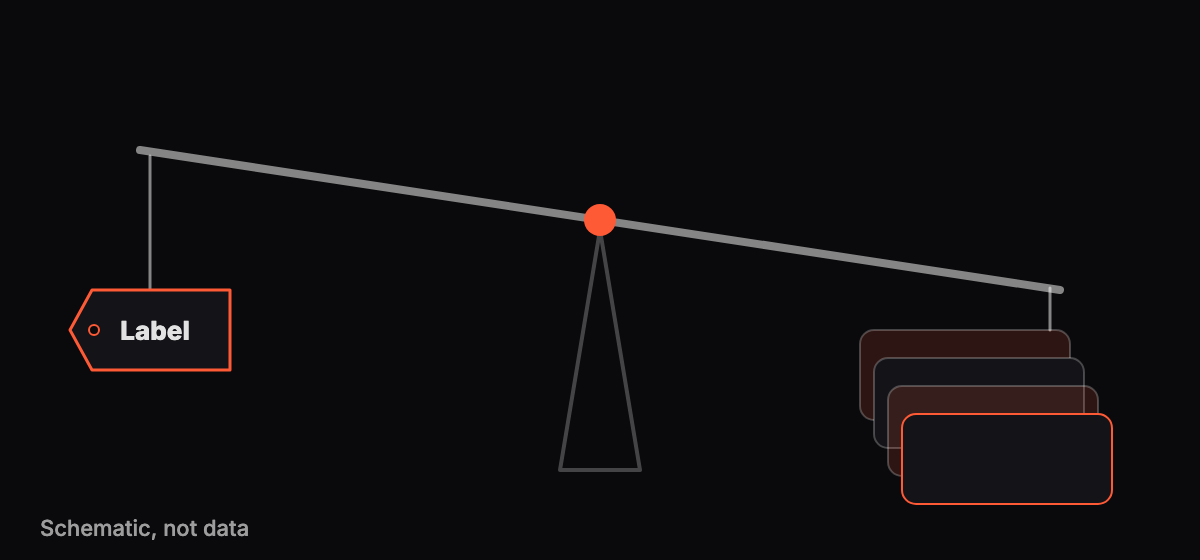
A drug, in FDA's framework, is defined partly by what it is intended for. The warning letters we read cite 21 CFR 201.128, which explains that intended use can be shown by objective evidence such as the seller's claims, labeling and advertising. So a label disclaimer is one piece of evidence, and the rest of a seller's marketing is another. When the rest points to human use, FDA says in these letters the label wording does not change its conclusion.
What the warning letters say
We read ten FDA warning letters posted between 2025-02-26 and 2026-08-24, all from FDA's drug center. We describe them by date and category only. We do not link them, because their web addresses contain recipient names, and we name no recipient. They are all findable in FDA's warning-letter database. None of the ten names BPC-157 or TB-500.
| Date | Category as FDA frames it | What FDA says about the label wording |
|---|---|---|
| 2025-02-26 | Unlawful internet sale of unapproved and misbranded drugs | Cites disclaimers such as "research use only" and "not for human consumption"; says the site's evidence establishes intended use as drugs |
| 2025-12-12 | Products marketed as SARMs, unapproved new drugs | Cites "for research only" and "not for human use"; says products are intended to be drugs for human use |
| 2026-03-31 (two letters) | Unapproved new drugs: GLP-type peptides and a diluent product | FDA cites "research use only" and "laboratory research purposes only"; same intended-use conclusion |
| 2026-06-17 | Unapproved new drugs: other peptides | Says the label disclaimers did not change the finding of intended human use |
| 2026-08-24 (four letters) | Unapproved new drugs: GLP-type and other peptides | Cites "for research use only", "not for human or veterinary use" and similar; same conclusion |
As of 2026-10-09. Dates are FDA posting dates; categories are our summary of FDA's headings.
The pattern is consistent. In one of the August 2026 letters FDA adds that a firm sold a diluent product next to a calculator tool, which FDA says provides the means to prepare an injectable drug for human use. In another, FDA describes the diluent as a solvent for preparing the sold products. FDA regards such combinations as evidence about intended use. We describe the point and nothing more.
One older letter, dated 2023-06-12, is the only one we found that names both BPC-157 and TB-500. FDA says the firm sold both in injectable and nasal forms, and that, despite its statements of "research purpose only" and "not for human consumption", the evidence establishes that the products are intended to be drugs for human use. It also cites the firm's website claims about gut and tissue effects as evidence of intended use, along with safety concerns about injectable and intranasal routes. That letter is outside the 2025 to 2026 window we targeted, and one letter is one letter: it describes FDA's view of one seller on one date.
We also did not read every FDA letter. A web search suggested two more peptide-related letters from 2024 and 2025; we read one, which had no BPC-157 or TB-500 mention, and did not read the other, so we cite neither.
Practical risks
None of what follows is a claim about a specific product. It is what FDA and published reviews say about unapproved peptides generally.
- No regulatory check on the contents. FDA's compounding page (current as of 2025-09-16) says compounded drugs are not FDA-approved and that FDA does not verify their safety, effectiveness or quality before marketing. A product sold under research wording is not compounded for a patient at all, so there is not even that layer of oversight. See how to read a label and certificate of analysis for what documents can show.
- Immune and impurity risks. FDA's pages cite possible immunogenicity from peptides given by certain routes, including through aggregation, and "complexities" with peptide-related impurities. FDA has said it lacks the information to know whether harm would occur.
- Contamination and inaccurate dosing. A 2026 Missouri Medicine abstract (PMID 42757290) counts contamination, manufacturing impurities and inaccurate dosing as risks of unapproved peptides, BPC-157 and TB-500 included. A 2025 systematic review of BPC-157 (PMID 40756949) says adverse effects are possible due to unregulated manufacturing, contamination or unknown clinical safety.
- Naming problems. Definitions of TB-500 differ by source: FDA describes a seven-amino-acid fragment, and a 2025 anti-doping paper says online products claim to be a fragment or the whole protein. A label cannot settle which. See the TB-500 page and the BPC-157 page.
- Adverse-event reports. FDA's BPC-157 briefing describes three reports through 2025-12-04, one tied to a research-purposes-only product that mixed BPC-157 with TB-500. FDA says those reports alone do not allow definitive safety conclusions.
- Sport. Neither substance is approved, and both are on the WADA 2026 List. A label disclaimer does not change that, as USADA's pages on prohibited peptides explain.

What this page does not say
It does not say every seller with this wording is the same, and it does not say any product is contaminated or clean. It does not give a legal conclusion about anyone's conduct. It says what FDA's letters conclude about the wording and what the sources say about risk. For blend products, which add a second ingredient question, see the blend page, and for documented effects see the side-effects page. The homepage lists every guide.
Sources
- FDA: Warning letters database ten letters dated 2025-02-26 to 2026-08-24 and one dated 2023-06-12, read 2026-10-09; searched by letter number, not linked individually
- FDA briefing document: BPC-157 read 2026-10-09
- FDA briefing document: TB-500 read 2026-10-09
- FDA: Certain bulk drug substances for use in compounding that may present significant safety risks page current as of 2026-04-22, read 2026-10-09
- FDA: Compounding and the FDA, questions and answers page current as of 2025-09-16, read 2026-10-09
- Moiz et al. 2026, Missouri Medicine PMID 42757290
- Vasireddi et al. 2025, HSS Journal PMID 40756949
- Equine doping controls of thymosin beta-4, 2025 PMID 39314109
- USADA: BPC-157, what athletes should know page data modified 2026-08-10, read 2026-10-09
FAQ
Is the research-use wording a legal status?
No. It is wording chosen by the seller. FDA's warning letters, as of 2026-10-09, say the wording does not change intended use when the seller's marketing shows human use.
Does the label make a product safe to use?
No. The label says nothing about contents or quality, and FDA says it does not verify the quality of unapproved products. See the label and certificate page for what documents show.
Did FDA name BPC-157 or TB-500 in recent letters?
None of the ten letters we read from 2025-02-26 to 2026-08-24 names either. One letter dated 2023-06-12 names both. The pattern in the language is the same across letters.
Why does FDA mention calculators and diluents?
In some letters FDA regards them as evidence that a firm supplies the means to prepare an injectable drug for people. We describe the point only.
Are research reagents themselves illegal?
We make no such claim. The issue FDA raises is a product's intended use as shown by the seller's marketing, not laboratory reagents as a category.
Where can I read the letters?
FDA's warning-letter database. Search by letter number or topic. We do not link individual letters.
Not medical advice. See the medical disclaimer.