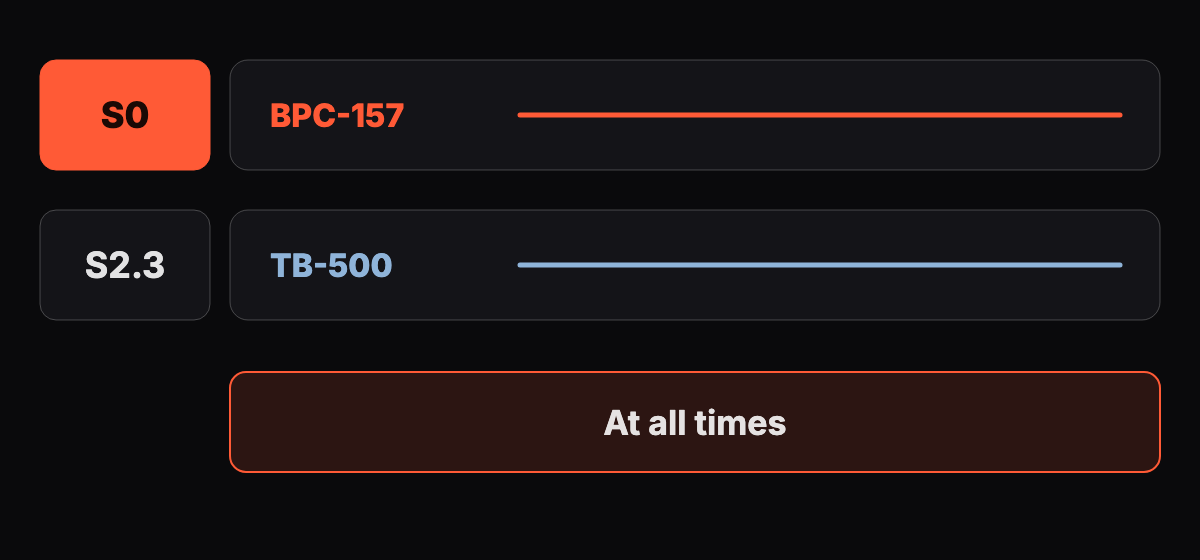
Quick answer: Yes. The WADA 2026 List, in effect 2026-01-01, names BPC-157 under S0 (non-approved substances) and TB-500 under S2.3 (growth factors and growth factor modulators). Both classes are "prohibited at all times", in and out of competition. BPC-157 is a Specified Substance; TB-500 is not. The List changes every January, so check the current edition. Statements are as of 2026-10-09.
If you are subject to drug testing, the question is not whether FDA has approved something. It is whether a substance, or a closely related one, is named on the World Anti-Doping Agency's Prohibited List. This page reads the 2026 List for both names, explains the two labels that matter (S0 versus S2.3, Specified versus non-Specified), and shows how to check the current edition. It covers anti-doping rules only; for the drug-law side, see the FDA page. It is not advice for any particular athlete, who should ask their anti-doping organization.
What the 2026 List says
We read the text of the 2026 List from copies of WADA's published document hosted by sports federations, because wada-ama.org blocked automated download. The official List page is on the WADA site. WADA's PDF states: "This List shall come into effect on 1 January 2026."
| Fact | Detail | Source |
|---|---|---|
| BPC-157 | Named by example in S0, Non-approved substances; the class "including but not limited to BPC-157" | WADA 2026 List, in effect 2026-01-01 |
| S0 timing | "Prohibited at all times (in- and out-of-competition)" | WADA 2026 List |
| S0 status | "All prohibited substances in this class are Specified Substances" | WADA 2026 List |
| TB-500 | Named in S2.3, Growth factors and growth factor modulators, as "Thymosin-ß4 and its derivatives e.g. TB-500" | WADA 2026 List |
| S2 timing and status | Prohibited at all times; all substances in the class are non-Specified | WADA 2026 List |
As of 2026-10-09. The List text we read is the 2026 edition, which stays in force until 2026-12-31.
Some websites place TB-500 in S0 as well. The List text we read does not; it places TB-500 in S2.3. A third class matters for four-peptide "stacks": S2.2.4 names CJC-1295, sermorelin, tesamorelin and ipamorelin among growth-hormone-releasing substances. That is relevant if someone describes a stack as more than two items; see the Wolverine stack page for how the term is used.
S0 in plain terms
S0 is the catch-all for pharmacological substances not covered elsewhere on the List. WADA describes the class as substances with "no current approval by any governmental regulatory health authority for human therapeutic use", and gives examples: drugs under pre-clinical or clinical development or discontinued, designer drugs, and substances approved only for veterinary use. In plain terms, if a substance has no approval anywhere for human therapeutic use and is not named in another class, it falls into S0 automatically. BPC-157 is the first of several examples WADA names for the class.
That is why the FDA picture matters here. FDA's briefing on BPC-157 notes that the compound is on the WADA List under S0, and states that it is not a component of an approved drug. The anti-doping logic follows from the absence of approval; it does not depend on any evidence about whether the compound works. For what the research does and does not show, see the BPC-157 page and the benefits page.
S2.3 in plain terms
S2 covers peptide hormones, growth factors, related substances and mimetics. S2.3 lists growth factors and growth factor modulators. The List's S2 text also says that other substances with "similar chemical structure or similar biological effect(s)" are prohibited. TB-500 is named as an example of a thymosin beta-4 derivative.
Definitions vary by source. FDA's TB-500 briefing describes TB-500 as a seven-amino-acid fragment of thymosin beta-4 and says the two are different substances. The WADA text names "Thymosin-ß4 and its derivatives" without giving a structure. For an athlete the practical reading is that both the whole protein and its fragments are covered. For more on that naming issue, see the TB-500 page.
"Prohibited at all times" and "Specified"
"Prohibited at all times" means the ban is not limited to match day. Some substances on the List are banned only in competition, such as certain stimulants; S0 and S2 are banned in and out of competition. A sample taken in the off-season, or a record of use or possession, can matter as much as one taken at an event. Both BPC-157 and TB-500 fall in this group.
"Specified Substance" is an administrative category under the World Anti-Doping Code. It affects how anti-doping organizations set the starting point for a sanction, and the List says all S0 substances are Specified while all S2 substances are non-Specified. The List's introduction cautions that Specified Substances "should not in any way be considered less important or less dangerous". We therefore do not read the label as a safety signal. On sanctions, USADA's 2024 announcement about a BPC-157 case states that for a positive test or the use of a specified substance such as BPC-157 the default sanction is two years, and that a reduction can apply when an athlete admits the violation. For non-Specified substances such as TB-500 the default period under the Code is longer. We print no figure for that, because we could not re-read the current rule text for this edition; ask your anti-doping organization for the exact periods.
USADA, the United States' anti-doping agency, publishes a page on BPC-157 under the title "What Athletes Should Know About the Prohibited Experimental Peptide", last modified 2026-08-10 per its page data. It says the peptide is prohibited under S0, is not approved for human clinical use by FDA or any other global health authority, and has no human clinical trials establishing efficacy. On exemptions, it says a therapeutic use exemption "is unlikely" to be approved because permitted alternatives exist, while considering each application case by case.
Testing, possession and supplements
USADA's announcement of 2025-09-17 about a sanction case describes BPC-157 as a Specified Substance and TB-500 as a non-Specified Substance, and says both, along with other peptides, are not approved for human clinical use. A 2024 USADA announcement about a different case involved a supplement said to contain BPC-157, where the athlete declared use and had not tested positive. These show that anti-doping action does not always begin with a positive urine test. Use, possession and encouraging others can all be violations. We searched the web on 2026-10-09 for a published adverse analytical finding for either substance at USADA, WADA, UKAD or Sport Integrity Australia and found none; that is a search result, not proof that none exists.
Anti-doping laboratories do work on detection. Papers from 2012, 2013 and 2025 describe analytical methods for TB-500 and thymosin beta-4 in horses, and describe TB-500 as a veterinary preparation (PMIDs 23084823, 23318763 and 39314109). They measure whether the peptide can be found; they say nothing about whether it works in a person. A USADA announcement dated 2026-09-29 about a science symposium says the small number of positive tests for peptide hormones reflects detection complexity "rather than an absence of abuse".
Supplements are a separate risk. USADA says athletes are "strictly liable" for what is in their bodies. That is the main reason that a product label, a clinic's assurance or a forum post does not settle whether something is safe to use under testing. See side effects for the quality problems that unregulated products raise.
How to check the current list
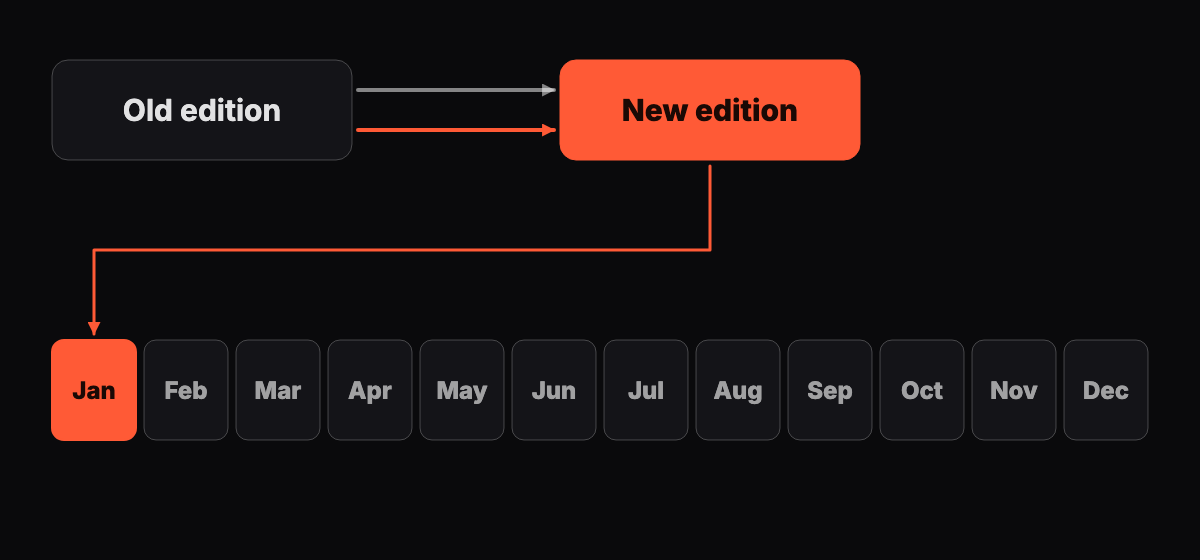
The List is revised every year and normally takes effect on January 1. Steps that apply to any athlete:
- Open the List page on the WADA site (linked above) and read the edition marked as valid today, not a cached or third-party copy.
- Search the document for the substance name, then read the whole class heading (S0, S2.3 and so on), because WADA's class text also covers related substances not named.
- Use the lookup tool your anti-doping organization recommends. USADA points athletes to Global DRO and warns that not all prohibited peptides are listed there by name.
- Ask your anti-doping organization or team physician before any decision. Do not rely on a seller's page.
USADA published an advisory, with page data dated 2026-10-06, about the List that takes effect on 2027-01-01. It says peptides "in general" are now named as prohibited in S0 and that its "include, but are not limited to" examples include BPC-157, TB-500 and thymosin beta-4. We have not read the 2027 List text, so read the 2026 table above as the edition in force today and check the new one when it publishes. Our homepage lists the other guides on these two compounds.
Sources
- WADA: Prohibited List the official page; 2026 edition text read from federation-hosted copies of the PDF on 2026-10-09
- WADA: Summary of major modifications and explanatory notes, 2026 List read 2026-10-09; it does not mention BPC-157, thymosin or TB-500
- USADA: BPC-157, what athletes should know page data modified 2026-08-10, read 2026-10-09
- USADA: What's new on the 2027 WADA Prohibited List page data 2026-10-06, read 2026-10-09
- USADA: 25th Science Symposium announcement posted 2026-09-29, read 2026-10-09
- USADA sanction announcements posted 2025-09-17 and 2024-08-22 (page addresses contain athlete names, so they are not linked), read 2026-10-09
- FDA briefing document: TB-500 read 2026-10-09
- Doping control analysis of TB-500 in equine urine and plasma, 2012 PMID 23084823
- Doping control analysis of seven bioactive peptides in horse plasma, 2013 PMID 23318763
- Equine doping controls of thymosin beta-4, 2025 PMID 39314109
FAQ
Is BPC-157 banned by WADA?
Yes. The 2026 List, in effect 2026-01-01, names it under S0 as a Specified Substance, prohibited at all times. Statement as of 2026-10-09.
Is TB-500 banned too?
Yes. The 2026 List names "Thymosin-ß4 and its derivatives e.g. TB-500" under S2.3. It is prohibited at all times and is not a Specified Substance.
Does it matter that FDA has not approved either?
For sport the lack of approval is the reason S0 applies to BPC-157. TB-500 is covered through its class. Neither depends on FDA's compounding decisions.
Can an athlete get an exemption?
USADA says that for BPC-157 an exemption is unlikely because permitted alternatives exist, while each request is considered individually. Ask your anti-doping organization.
Do the rules apply outside competition?
Yes. Both classes are prohibited in and out of competition, according to the List text.
Will the list change?
WADA revises the List each year. USADA's advisory says the edition effective 2027-01-01 names peptides in general under S0. Check the edition valid on the day you need it.
Not medical advice. See the medical disclaimer.