Quick answer: "Glow" is the name some pages give to a blend of BPC-157, TB-500 and GHK-Cu, and "Klow" adds a fourth peptide, KPV. Each part has a separate record, and no human study tested any of the blends. No FDA-approved drug contains BPC-157 or TB-500 as of 2026-10-09. GHK-Cu has small human trials of skin creams, but none of injected GHK-Cu alone that we could find.
Glow and Klow are marketing names. They appear on clinic blogs, education pages and newsletters as upgrades to the "Wolverine" pair, and they promise skin and tissue benefits on top of the injury claims. This page takes the blends apart: what each named component is, what has been studied in people and in animals, what regulators say, and how the claims grade. It does not give amounts, schedules or sources for any blend, because no published source supports them.
What the names mean
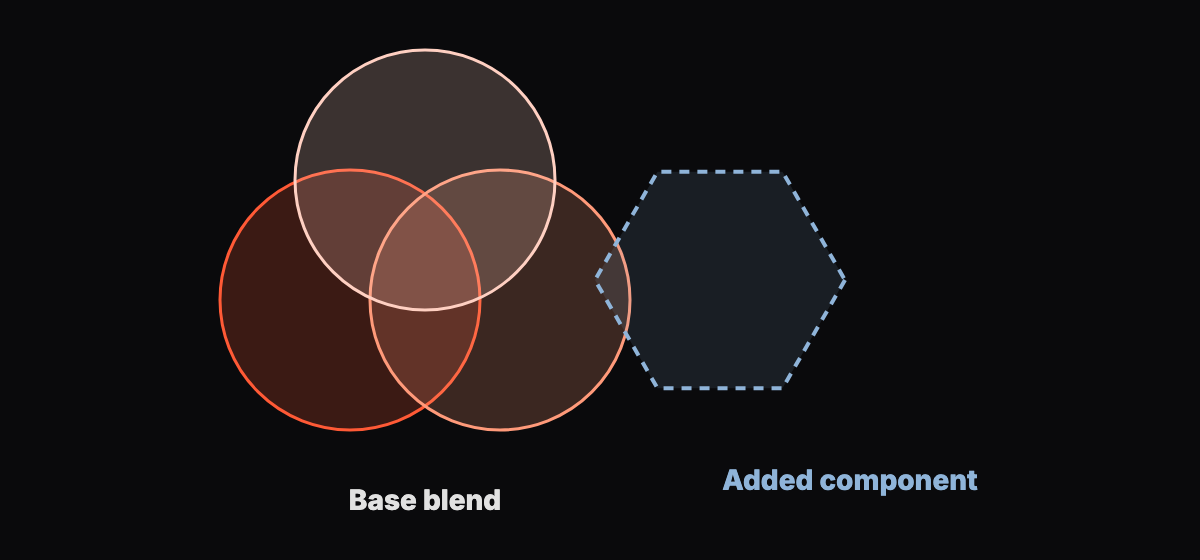
Sources that define the names agree with each other on the parts. A peptide-education blog (dated 2026-03-25, updated 2026-03-31) says the Glow blend extends the two-peptide Wolverine pair by adding GHK-Cu. A health influencer's newsletter dated 2025-08-19 lists the same three: BPC-157, TB-500 and GHK-Cu. The same two sources describe Klow as Glow plus KPV, a four-peptide combination. The newsletter closes with the slogan "We ARE the human studies," which is worth quoting only as an example of marketing language: it is not a study.
None of the pages we read cites a human trial of any blend. The pitch differs by name. Glow is pitched at tissue repair plus skin and anti-aging; Klow is pitched as adding inflammation control. For the base pair and the nickname behind it, see the Wolverine peptide stack page, and for the homepage overview of the two core peptides, see BPC-157 and TB-500.
Component by component
| Component | What it is | Human evidence | Animal or lab evidence |
|---|---|---|---|
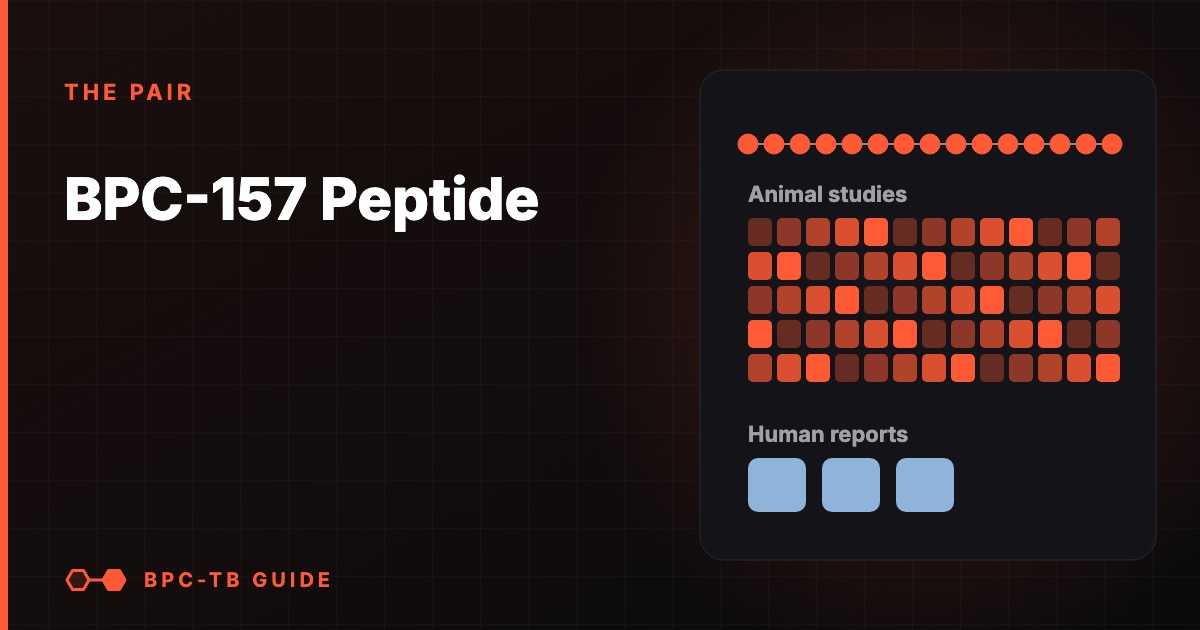
| BPC-157 | A synthetic 15-amino-acid peptide with a sequence taken from a protein described in human gastric juice | Three small uncontrolled reports, about 30 people, one author team | Many rat studies, mostly from one Zagreb group |
| TB-500 | Described by FDA as a seven-amino-acid fragment of thymosin beta-4; the name is not used consistently | No human study of TB-500 found; trials of full-length thymosin beta-4 exist in other settings | A 2026 rat Achilles study (32 rats); chemistry and cell work |
| GHK-Cu | A copper complex of a three-amino-acid peptide, first reported from human blood plasma in a 1977 paper | Small trials of skin creams with mixed results; none of injected GHK-Cu alone found | Cell work and one rat knee study that faded |
| KPV | A short peptide that some pages call an anti-inflammatory tripeptide (a seller-style claim) | None found | Not reviewed here |
Table current as of 2026-10-09. Human evidence for each component is covered in more detail on the BPC-157 page and the TB-500 page.
The first two rows are covered at length elsewhere on this site. The last two need explaining, starting with the one that carries Glow's skin pitch.
GHK-Cu has its own, separate record
GHK-Cu is the copper complex of glycyl-L-histidyl-L-lysine, three amino acids. A few sellers call it a hexapeptide, but the count is three. It was first described in a 1977 paper on a growth-modulating tripeptide from human blood plasma. It is a different substance from BPC-157 and TB-500, studied by different groups and mostly for skin, so what is known about it does not transfer to the pair.
What the human trials found. A 2006 randomized trial in people who had laser skin resurfacing around the mouth used a skin-care regimen with or without GHK-Cu. Thirteen people completed it. Blinded evaluators and computer image analysis found no significant difference in redness resolution, and all participants improved in wrinkles and skin quality with no difference between groups. A patient questionnaire favored the GHK-Cu regimen for overall skin quality (P = .04), but the abstract concluded that objective evaluation found no significant improvement. It was topical, tiny, and limited to skin.
A 1992 randomized, evaluator-blinded trial in 86 adults with venous stasis ulcers compared a silver sulfadiazine cream, a copper tripeptide cream and an inert vehicle. Its abstract states there was no difference between the copper cream and the vehicle, and the silver cream reduced ulcer size more than either. It does not show a benefit of the copper cream for those ulcers.
A 2026 review (Pharmaceutics, literature search to 2026-08-12) summed up the human record as small or incompletely characterized, noted the 13-person study was negative on objective endpoints, and concluded that GHK-Cu is "a promising but unproven therapeutic cargo" rather than a clinically validated drug. A 2026 systematic review that kept 64 records from 1,247 described the human literature as "thin and fragmented," with most randomized trials small and conducted on facial cosmetic creams.
The injection question. The Glow pitch implies GHK-Cu given by injection. A PubMed search run on 2026-10-09 for GHK-Cu, GHK-copper or copper tripeptide together with injection routes returned 14 records, and none was a controlled human trial of injected GHK-Cu alone for any condition. The only human injection item was a 2018 open-label hair-loss series of about 1,000 people who received scalp injections of a six-factor formulation. That formulation included thymosin beta-4 and copper tripeptide-1 among its ingredients. It had no control group, it cannot isolate GHK-Cu's role, and it was injected into scalp skin, not into muscle or joints.
A 2026 sports medicine review in the American Journal of Sports Medicine said GHK-Cu showed promise in wound-related and anti-inflammatory effects, but that no clinical data support its use for musculoskeletal conditions.
Animals and cells. In human skin cells in a dish, a 2005 report found faster growth of normal and irradiated fibroblasts. In a 2015 study of 72 rats after knee ligament reconstruction, weekly joint injections of GHK-Cu produced smaller knee looseness and higher graft stiffness at six weeks, but no difference at twelve weeks, and the authors said the benefit could not last once the injections stopped. That is the only musculoskeletal animal study we found for GHK-Cu, and it is a rat study that faded.
Its regulatory status. We have not re-read FDA's current listing for GHK-Cu at copy review, and its status differs by route of administration, so this page does not state it. We could not confirm it; check FDA's compounding pages directly.
KPV
KPV is the fourth component in Klow. FDA's compounding page, current as of 2026-04-22, lists KPV in the same "nominated but withdrawn" table as BPC-157 and TB-500 and says FDA has not identified human exposure data for it by any route. KPV was also on the 2026-07-23 advisory committee agenda, with the uses FDA evaluated being wound healing and inflammatory conditions. We found no human trial of KPV, and none of the blend pages we read cite one. The claim that KPV adds inflammation control comes from the blends' sellers.
Claims about the blends, graded
| Claim as marketed | Who says it | What supports it | Grade |
|---|---|---|---|
| "The Glow blend supports tissue repair and skin" | A peptide-education blog, clinic-style pages | No human study of the three together exists. GHK-Cu skin-cream trials are small with mixed results. | No published support found |
| "GHK-Cu improves skin quality" | Clinic-style pages, seller descriptions | Small topical trials. The 2006 trial was negative on objective measures and positive on a questionnaire. | Small human reports only |
| "Injectable GHK-Cu repairs tendons and joints" | Blend pages | One 2015 rat knee study where the benefit was gone by twelve weeks. A 2026 review said no clinical data support musculoskeletal use. | Animal or lab studies only |
| "Klow adds inflammation control through KPV" | A peptide-education blog, a newsletter | FDA says it found no human exposure data for KPV by any route. | No published support found |
| "More peptides in the blend means more benefit" | Forum posts | No source tested adding components. The one test of the base pair, in 32 rats, reported no added benefit over either agent alone. | Animal or lab studies only |
| "These blends are covered by the same approvals as proven drugs" | Some product pages | FDA states neither BPC-157 nor TB-500 is a component of an approved drug. | Contradicted by sources |
Grades come from the five-level key explained on the benefits page. Table current as of 2026-10-09. The benefit claims for the pair itself are graded on the benefits page, and common forum statements are graded on the forum claims page.
What FDA says about blends
A blend does not have a regulatory status of its own. The status of each component applies to it.
FDA's compounding page, current as of 2026-04-22, lists BPC-157 and "Thymosin beta-4, fragment (LKKTETQ), also known as TB-500" under "Bulk drug substances nominated but withdrawn." FDA's briefing documents say neither has a USP monograph or is a component of an approved drug. Under section 503A of the federal drug law, a bulk substance with no monograph that is not a component of an approved drug can be used under the compounding exemption only if it appears on a list the Secretary develops through regulations. See the legal status page for what that means.
On 2026-07-23 FDA's Pharmacy Compounding Advisory Committee discussed BPC-157 and TB-500 for possible inclusion on the 503A bulks list. News outlets reported a narrow vote in favor. FDA's meeting page, current as of 2026-08-06, posts briefing documents but no vote summary, and advisory committees make non-binding recommendations. As of 2026-10-09 we found no FDA final decision, proposed rule or enforcement statement. A vote for one peptide on that agenda is not a ruling on a combination vial.
FDA's data on products that blend BPC-157 and TB-500 are thin. Its BPC-157 briefing describes an adverse event report of widespread skin and gum darkening with a product labeled for research purposes only that contained both peptides, recurring when the product was used again. FDA said it cannot tell which ingredient was responsible. A blend makes that question harder, not easier: if a reaction happens, no one can say which part caused it. FDA also records two complaints involving blended TB-500 and BPC-157 products, with no safety assessment attached.
The "research use only" wording on many blend labels does not change what FDA considers a product's intended use. FDA warning letters dated between February 2025 and August 2026 say so, and the research use only page reads them. The blend label page explains what a combination vial's label can and cannot prove.
Sports
The WADA 2026 List, in effect from 2026-01-01, prohibits BPC-157 in S0 and "Thymosin-ß4 and its derivatives e.g. TB-500" in S2.3 at all times. A blend containing either is therefore a concern for drug-tested athletes. We did not confirm how the List addresses GHK-Cu or KPV, and this page makes no statement about them. Check the current List and the Global DRO tool USADA points to.
What this page does not give you
There are no amounts, schedules or protocols here. No source we read supports a human dose for any component, and the dosage page explains the problem. Oral forms have their own record, covered on the capsules and oral forms page. The side effects page lists what is documented and what is unknown, and the thymosin beta-4 page sets out how that protein relates to TB-500.
Sources
- FDA: Certain bulk drug substances for use in compounding that may present significant safety risks page current as of 2026-04-22, read 2026-10-09
- FDA: July 23-24, 2026 meeting of the Pharmacy Compounding Advisory Committee page current as of 2026-08-06, read 2026-10-09
- FDA briefing document: BPC-157 read 2026-10-09
- FDA briefing document: TB-500 read 2026-10-09
- WADA: Prohibited List 2026 List in effect 2026-01-01, read 2026-10-09
- GHK-Cu skin resurfacing trial, 2006, Archives of Facial Plastic Surgery PMID 16847171
- Copper tripeptide venous ulcer trial, 1992, Journal of Vascular Surgery PMID 1495150
- Hair growth factor formulation series, 2018, Journal of Cosmetic and Laser Therapy PMID 29482481
- GHK-Cu review, 2026, Pharmaceutics PMID 42797253
- GHK-Cu systematic review, 2026, Archives of Internal Medicine Research PMID 42787770
- Injectable peptide therapy primer, 2026, American Journal of Sports Medicine PMID 41476424
- GHK-Cu and human skin cells, 2005 PMID 15655171
- GHK-Cu after ligament reconstruction in rats, 2015, Journal of Orthopaedic Research PMID 25731775
- Growth-modulating serum tripeptide, 1977, Experientia PMID 858356
- Bicer et al. 2026, Joint Diseases and Related Surgery PMID 42542926
- Pages read as claim sources and not linked: a peptide-education blog (2026-03-31), a health influencer's newsletter (2025-08-19) and retail listings.
FAQ
What is in the Glow peptide blend?
Pages that define it say BPC-157, TB-500 and GHK-Cu. Klow adds KPV. These are marketing names, not standard formulations, so the contents of a given vial depend on the seller.
Is Glow the same as the Wolverine stack?
No. The Wolverine nickname usually means BPC-157 plus TB-500. Sources describe Glow as that pair with GHK-Cu added.
Has any Glow or Klow blend been tested in people?
We found no human study of either blend as of 2026-10-09. The pages that sell or describe them do not cite one.
Does GHK-Cu have evidence?
Small human trials of skin creams exist with mixed results, and a 2026 review called the compound promising but unproven. We found no controlled human trial of injected GHK-Cu alone. One rat knee study found a benefit at six weeks that was gone by twelve.
Are these blends FDA-approved?
No. FDA states neither BPC-157 nor TB-500 is a component of an approved drug. We have not confirmed FDA's current position on GHK-Cu and leave it out.
Can a drug-tested athlete use a blend?
BPC-157 and TB-500 are both prohibited at all times on the WADA 2026 List, so a blend containing either carries that risk. A licensed clinician and the anti-doping body that tests you are the right people to ask.
Not medical advice. See the medical disclaimer.